Survivor American Flag SVG: Graphics & Crafts Asset Review
As a graphic designer who’s built brand identities for handmade businesses, launched seasonal campaigns for local boutiques, and developed printable collections for Etsy sellers, I recently evaluated the Survivor American Flag Svg Cutting File for a real client project — a Fourth of July-themed product line for a small-batch candle brand targeting patriotic, community-minded shoppers. Here’s my unfiltered assessment, based on how this asset performs in actual creative design workflows.
First Impression: Bold, Textured, and Intentionally Imperfect
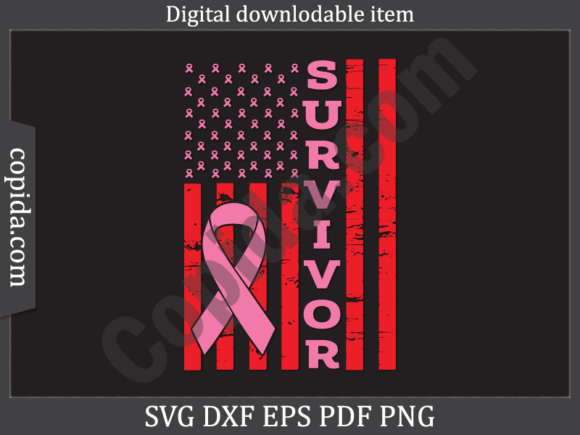
The Survivor American Flag Svg Cutting File lands with visual weight. It’s not a sterile vector flag — it’s weathered, slightly distressed, with subtle texture overlays and deliberate irregularities in star placement and stripe alignment. That intentional “survivor” aesthetic evokes resilience, authenticity, and handcrafted pride. It reads as modern design with heritage warmth — ideal for brands that lean into storytelling over polish. For a client whose candles are named after historic towns and packaged in kraft boxes with handwritten labels, this flag doesn’t just decorate — it deepens narrative cohesion.
Where It Shines in Real Client Projects
This graphic design asset excels where emotional resonance matters more than clinical precision:
- Product mockups — Looks exceptionally strong on t-shirt design previews, tote bag renders, and mug sublimation mockups, especially against natural textures like burlap or uncoated paper.
- Packaging design — Works beautifully as a foil-stamped accent on candle lids or as a die-cut window element on gift boxes.
- Social media graphics — Scales powerfully for Instagram posts and Pinterest pins; its contrast and shape hold up even when cropped tightly.
- Cricut projects — The clean SVG and DXF files cut flawlessly on vinyl and iron-on material, making it a reliable choice for crafters producing limited-edition merchandise.
- Printable design bundles — Included PNG with transparent background integrates smoothly into Canva templates, editorial layouts, and blog headers without clipping artifacts.
- Brand identity accents — Not a logo, but an effective supporting brand element — think banner dividers, pattern repeats, or campaign-specific watermark overlays.
Where to Use It With Intention (Not Assumption)
This isn’t a universal drop-in asset. Its character demands context:
- Avoid small sizes — Below 1.5 inches wide, detail loss dulls its impact; the texture blurs, and stars become indistinct. Best reserved for medium-to-large layout areas.
- Reserve for themed collections — Don’t force it into year-round branding. It belongs in seasonal campaigns, veteran-focused initiatives, or Americana-inspired product lines — not corporate annual reports.
- Test carefully on complex backgrounds — While the PNG has transparency, busy patterns or low-contrast gradients can muddy its readability. Always preview on final background colors before finalizing.
- Pair thoughtfully with typography — It harmonizes with bold sans serifs (like Montserrat Bold) and rustic display fonts, but clashes with ultra-thin serifs or delicate scripts unless deliberately juxtaposed for contrast.
Design Judgment: Trust, Hierarchy, and Emotional Payoff
In client work, every asset affects perceived professionalism and audience trust. This Survivor American Flag Svg Cutting File strengthens emotional appeal — it signals authenticity and shared values. But it also shifts visual hierarchy. When placed near body copy or calls-to-action, its dominance must be balanced. I’ve used it successfully as a hero graphic above product grids, then scaled down to 30% opacity as a subtle watermark behind testimonials — maintaining brand consistency without overwhelming content.
For print-on-demand sellers, its commercial license is non-negotiable — always verify before integrating into an Etsy product or Redbubble collection. And for digital sellers building Canva templates, the EPS and PDF versions ensure crisp rendering across platforms, while the SVG remains fully editable for color swaps or layer adjustments.
Practical Designer Notes Before You Commit
Before dropping this into a live client file, run these checks:
- Preview in black and white — does the distressing still read clearly?
- Test contrast on both light and dark backgrounds using the PNG and SVG exports.
- Zoom to 400% in Illustrator — inspect anchor points and path smoothness (especially around star edges).
- Place it on realistic product mockups — not just flat white screens.
- Print a test swatch on your target substrate (e.g., matte sticker paper or cotton fabric) to confirm fidelity.
- Confirm all five formats — SVG, DXF, EPS, PDF, PNG — open cleanly in your preferred apps (Cricut Design Space, Affinity Designer, Canva Pro, etc.).
- Verify the PNG uses true alpha transparency — no residual white halo or compression artifacts.
- Compare how it pairs with your client’s existing font stack: try it beside serif, sans serif, script, and display typefaces to assess visual harmony.
Final Verdict: A Strategic Creative Asset, Not Just Clipart
This isn’t generic clipart. The Survivor American Flag Svg Cutting File is a considered illustration — one that supports storytelling, reinforces brand voice, and adds tactile credibility to digital and physical outputs. For handmade business owners, marketers launching holiday collections, designers building social-first campaigns, or crafters executing precise Cricut projects, it delivers measurable value — provided it’s deployed with intention. In my candle brand project, it became the visual anchor for their entire summer launch: on labels, website banners, Instagram Stories, and limited-run merch. That’s the mark of a functional, emotionally intelligent graphic design asset — and why it earns a place in my curated design bundle library.